You WON'T Get Realtime LLM Cost From Your Public Cloud
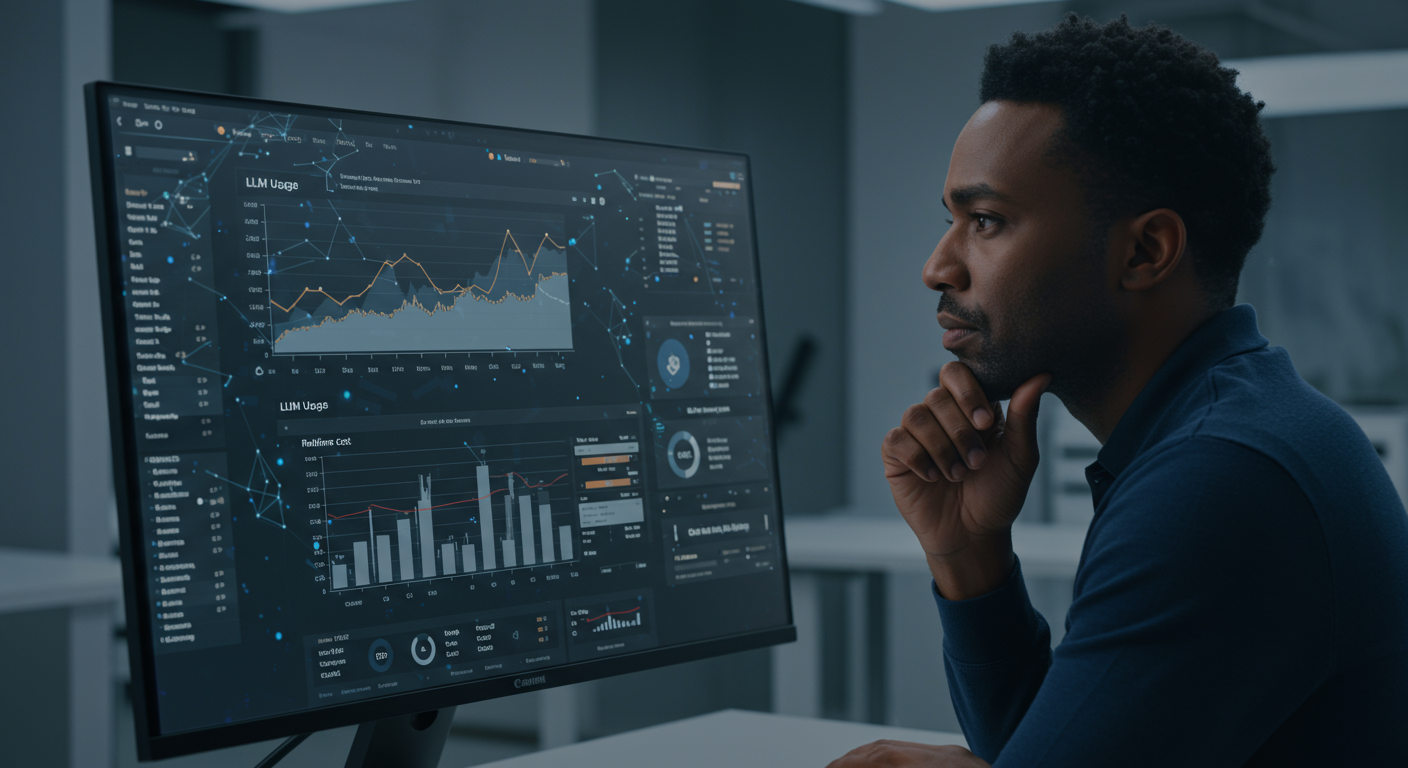
As an engineering manager who has spent years grappling with infrastructure costs across all public cloud environments, I've seen firsthand how quickly expenses can spiral without proper visibility. When it comes to Generative AI, specifically LLMs, there's a common misconception that standard public cloud cost monitoring will give you the real-time insights you need. Let me be direct: you won't get realtime LLM cost from your public cloud provider.
This isn't an indictment of cloud providers; it's a fundamental mismatch between how LLM usage is billed and how traditional cloud services are aggregated for cost reporting. I've designed and managed systems where every penny counts, and the hourly or even daily, batched reports from your AWS, Azure, or GCP console are simply too late for effective LLM cost management.
Public cloud providers are excellent at giving you an hourly or daily aggregate of your compute, storage, and network usage. You'll see line items for your EC2 instances, S3 buckets, or serverless function invocations. This works well for resources with relatively predictable billing cycles or larger, less granular units of consumption.
LLMs, however, operate on a per-token basis. Consider models like OpenAI's GPT-4 Turbo, where input tokens might cost $10 per 1M and output tokens $30 per 1M; their newer GPT-4o is cheaper at $2.50/$10, but complex use cases still default to the pricier models. Or Anthropic's Claude 3 Opus, with even higher rates of $15/1M input, $75/1M output. Every character, every word, every prompt, and every response directly translates into a micro-transaction. A single complex query or an extended conversation can quickly rack up hundreds or thousands of tokens.
Your public cloud provider aggregates these individual token costs into an hourly total. This means if an anomaly in your application causes a spike in LLM calls, or an unoptimized prompt is suddenly getting used thousands of times, you won't see the financial impact until a few hours have passed, or even until the next morning at best. By then, hundreds or even thousands of dollars might have been spent unnecessarily. That delay is precisely why traditional alerts based on cloud billing data are often too late.
Think about the difference. If a rogue Lambda function starts executing too often, you might notice an increase in invocations and duration metrics quickly. But with LLMs, it's not just the number of calls; it's the content of each call. A slight change in prompt engineering, perhaps adding a few more examples or constraints, can easily double or triple the token count for a single interaction. And that's often invisible to generic API monitoring.
As someone who's focused on FinOps and cloud economics, I know that granular data is the bedrock of effective cost control. With traditional infrastructure, you might monitor CPU utilization or data transfer. For LLMs, you need to monitor token consumption, both input and output, per-user, per-feature, or even per-prompt template, and you need to do it in near real-time.
This isn't a problem unique to any single public cloud; it's inherent to the billing model for these advanced AI services. The cloud provides the underlying infrastructure to access these models, but the LLM API providers (OpenAI, Anthropic, Google AI) are the ones charging per token. Your cloud bill reflects the sum of these charges, not the details.
Effective LLM cost management also involves understanding more than just the raw token count. You have other factors at play:
To get a handle on LLM cost management, you need a system that can:
For example, integrating a solution to track and optimize these calls might look something like this in your code. It's a simple change at the fetch layer:
import OpenAI from "openai";
import { withSemanticGuard } from "@semanticguard/ai-sdk";
const openai = new OpenAI({
  apiKey: "your-openai-key",
  fetch: withSemanticGuard(), // intercepts and optimizes all LLM calls
});
This single line of code allows a dedicated gateway to inspect, optimize, and report on every LLM interaction, giving you the real-time insights your public cloud can't.
Don't wait for your next cloud bill to be surprised by your LLM spend. Here are concrete steps you can take today to get better control: